
No products in the cart.
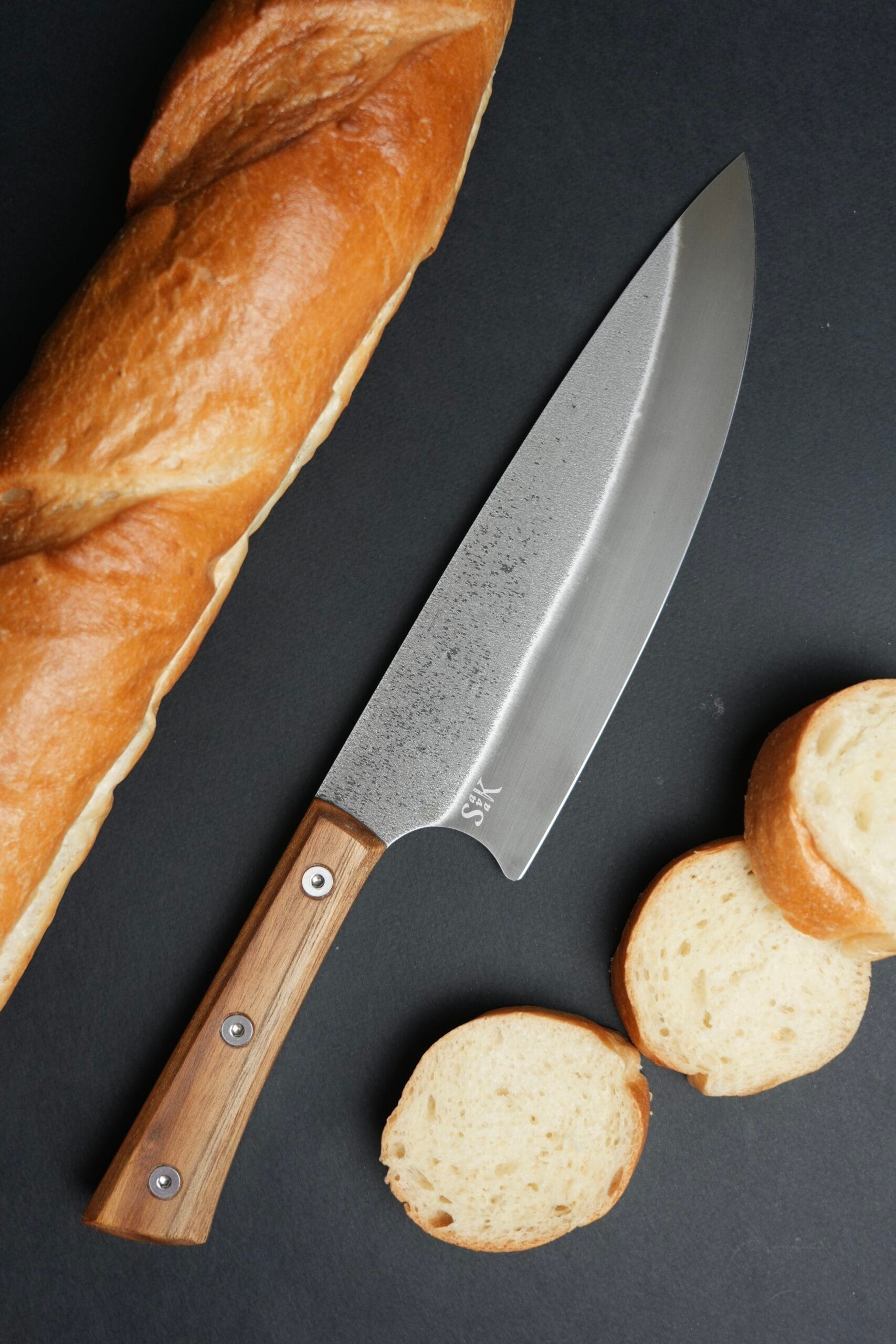
At some point, every serious home cook hits the same fork in the road. This guide breaks down whether handmade kitchen knives are worth it in real home cooking.
You’re slicing onions and the knife wedges instead of gliding. You push harder, the board feels loud, and the cut becomes work instead of motion. Or you’ve sharpened the knife twice in a month, and it still doesn’t feel stable on tomatoes. Then you see a handmade kitchen knife for $250–$400 and wonder if it’s real performance – or just an expensive story.
So let’s answer it cleanly:
Are handmade kitchen knives worth it?
Sometimes. Sometimes absolutely not. But the only honest way to decide is to stop thinking in price tiers and start thinking in outcomes: how the knife behaves through food, how it holds an edge over your actual cooking rhythm, and whether it makes your daily prep easier – or simply prettier
Why Handmade Kitchen Knives Cost More
The price difference isn’t mystical. It’s usually four things: time, process control, geometry, and finishing decisions. In a kitchen knife, those aren’t “nice-to-haves” – they are the entire experience.
Time, not romance
Handmade doesn’t just mean a person touched the knife. It usually means the geometry and fit were refined by human hands instead of being left to mass-production averages.
That refinement takes time:
- The grind is adjusted rather than “one spec for everything.”
- the edge is finished with intention, not just “sharp enough to ship.”
- The handle is shaped to feel right after 20 minutes of prep, not 20 seconds of posing for photos
Time is expensive because skill is expensive.
Heat treatment control (where performance actually lives)
Steel names sell knives, but heat treatment makes them behave.
Two blades can both be “N690” and still cut and hold an edge very differently depending on how they were hardened, tempered, and finished. Hardness numbers matter, but only in context:
- 58–59 HRC can be great for stainless kitchen knives that need stability and forgiveness.
- 60–61 HRC can offer stronger edge retention – if the geometry supports it and the user isn’t abusing the edge on bones, glass boards, or twisting cuts.
What you pay for in good handmade work is not “a higher HRC number.” You pay for a maker choosing the right balance for the knife’s intended job.
Geometry behind the edge (the part most buyers don’t evaluate)
In kitchen use, geometry is often more noticeable than steel.
A thin grind – especially one refined to reduce wedging – changes everything:
- carrots crack less and split cleaner
- sliced onions instead of forcing layers apart
- herbs cut without bruising as much
- tomatoes stop being a “test” and become routine
The best marketing in the world can’t fake that. You feel it in the first prep session.
5 Signs of a Genuine Handmade Knife
Balance and handle work (why some knives never become “your knife”)
Most people don’t stop using a knife because it isn’t sharp. They stop using it because it doesn’t feel good.
Handle shape, finish, and balance determine whether the knife becomes a daily tool or something you avoid. Wood finishes that handle moisture well, or materials like Micarta/Richlite that stay grippy, matter more than “exotic” materials that look impressive but feel slippery or harsh after time.
When Handmade Kitchen Knives Are NOT Worth It
This is where most sellers lie. Knifia shouldn’t.
Handmade kitchen knives are often not worth it if:
- you cook occasionally and don’t care about cutting feel
- you prefer zero-maintenance behavior and rarely sharpen
- you use glass or ceramic boards (they’ll punish any edge)
- you want dishwasher convenience (don’t – ever – on good knives)
- you treat kitchen knives like beaters (twisting, prying, bones)
In those situations, a well-chosen factory knife can be smarter. Paying more doesn’t magically create better habits.
When Handmade DOES Make Sense
Handmade makes it worth it when the knife is going to see real use, and the improvements actually show up in your week.
It makes sense if:
- you cook 4+ times per week
- you prep vegetables often
- you care about clean slicing more than brute force
- you want stable sharpness (not “sharp for one day”)
- you enjoy tools that make work feel smoother
That’s when “worth it” shifts from luxury to practicality.
Matching Knife to Cook: Real Knifia Examples Without the Hype
Here’s the important part: Handmade only becomes worth it when the knife fits your cooking style. So instead of saying “this is the best,” let’s match knives to real kitchens.
1) Compact precision for everyday home cooking
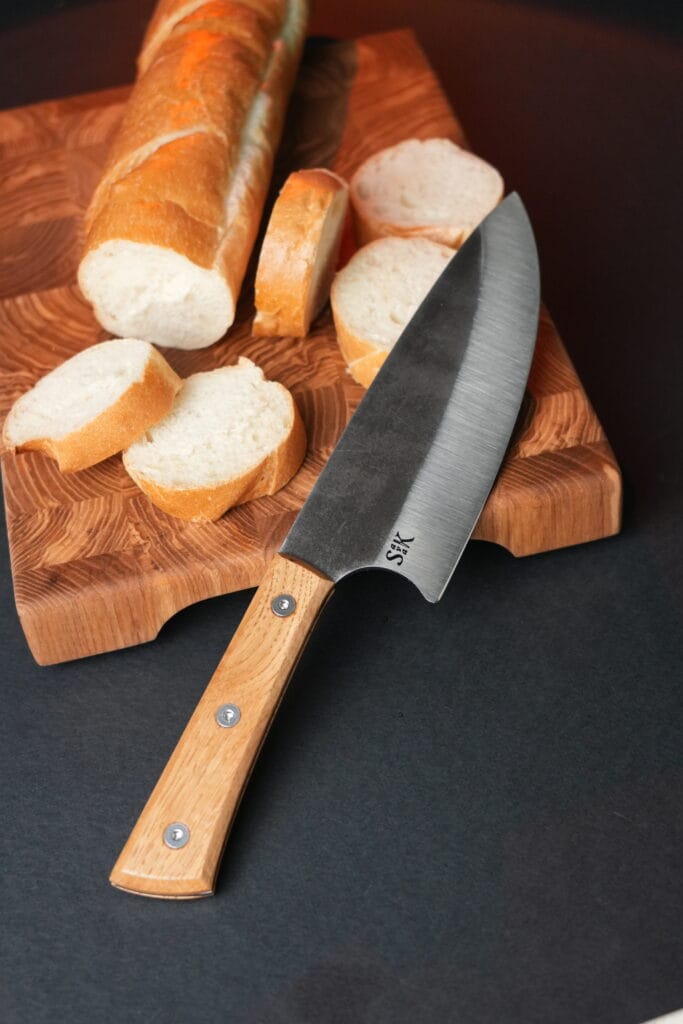
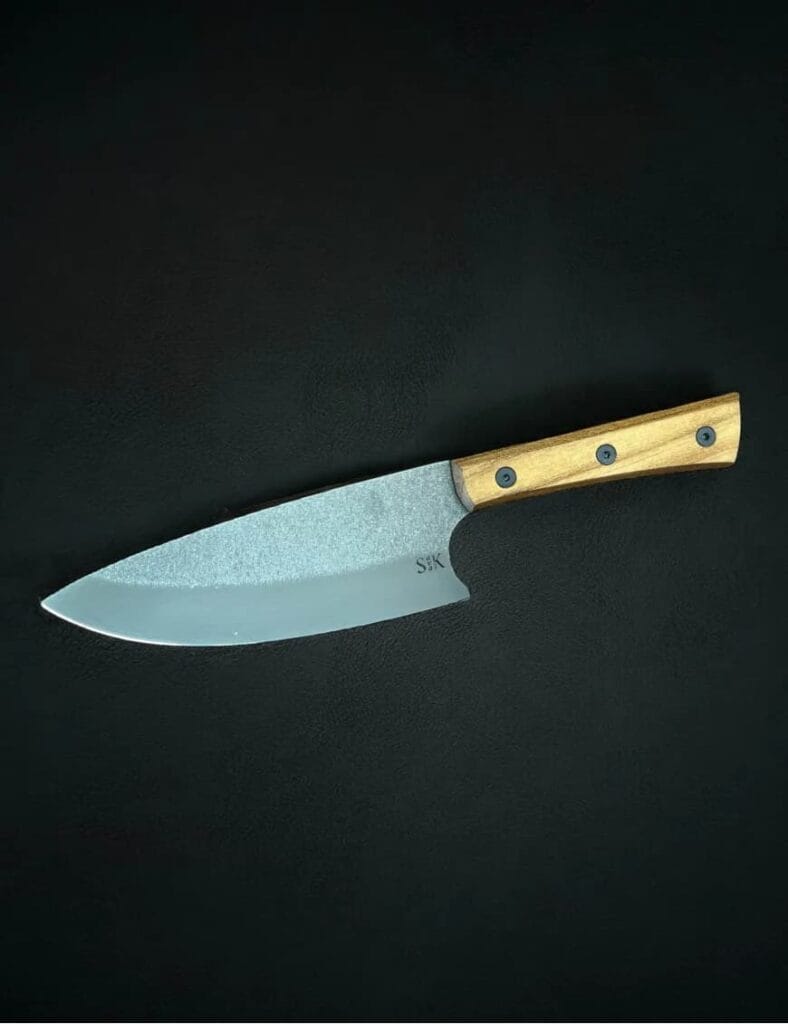
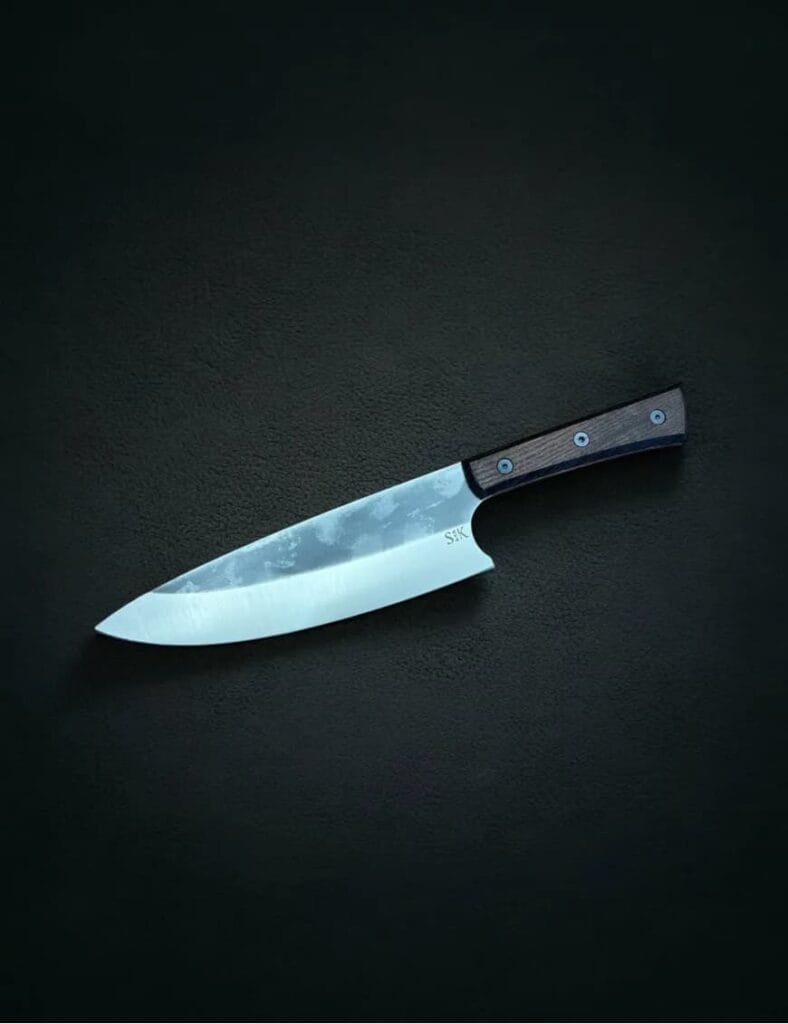
SAVAKNIFE Chef Knife #1 – 165 mm
If you cook in a normal home kitchen with normal counter space, 165 mm is often a sweet spot: enough blade to be versatile, short enough to stay controllable.
What makes this knife interesting isn’t the marketing, it’s the practical build:
- Two steel options depending on your preferences:
X12MF tool steel (60 HRC) for aggressive cutting feel and strong edge holding, or
EN 1.4116 stainless steel if you prioritize corrosion resistance and low-stress maintenance. - A geometry-focused approach that favors slicing, chopping, and dicing without feeling oversized.
- An ash handle finished for grip and comfort over long prep sessions.
This is the knife for the cook who wants “clean and easy” more than “big and impressive.”
2) Longer strokes and higher prep volume
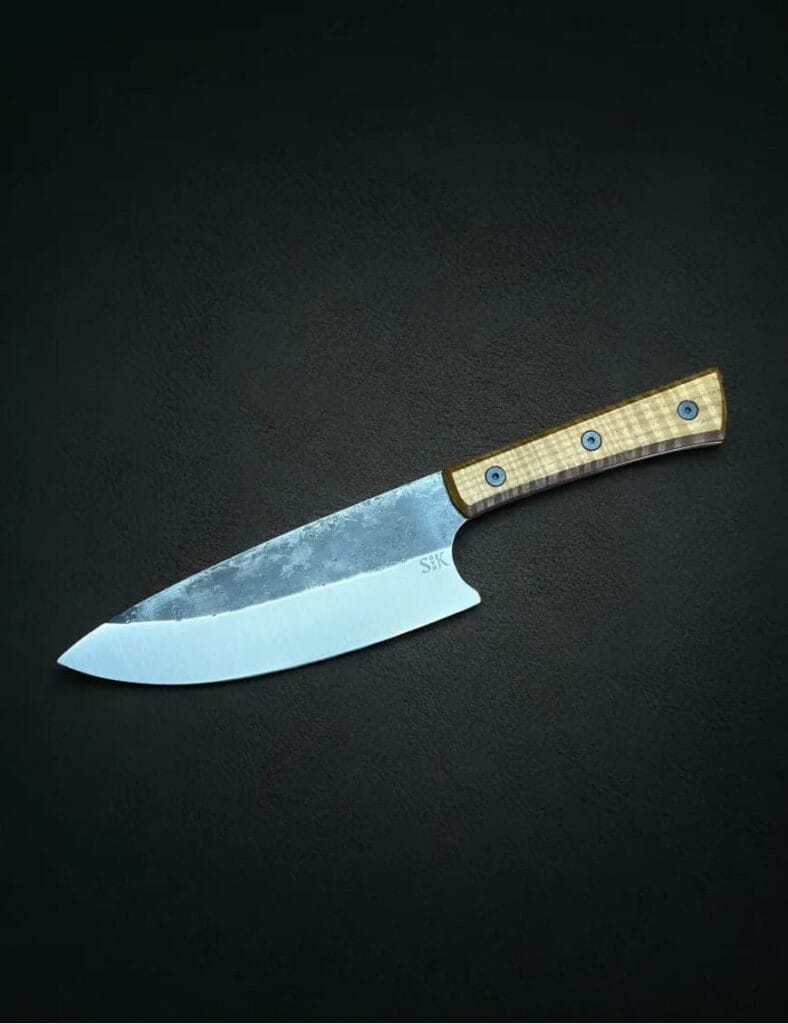
SAVAKNIFE Chef Knife #2 – 190 mm (including Polymer Edition)
Some cooks prefer reach. If you slice larger vegetables, work through proteins, or simply like longer motion, 190 mm makes sense.
The useful detail here is the behind-the-edge focus:
- EN 1.4116 stainless at 58–59 HRC
- refined to ~0.2 mm behind the edge for efficient cutting
And if you hate food sticking – especially with starchy ingredients – the polymer-coated version is not a gimmick if it truly reduces drag and sticking in your workflow. Less sticking means less “stop-and-reset” during prep, which matters more than most people admit.
3) Premium stainless performance with stable edge life
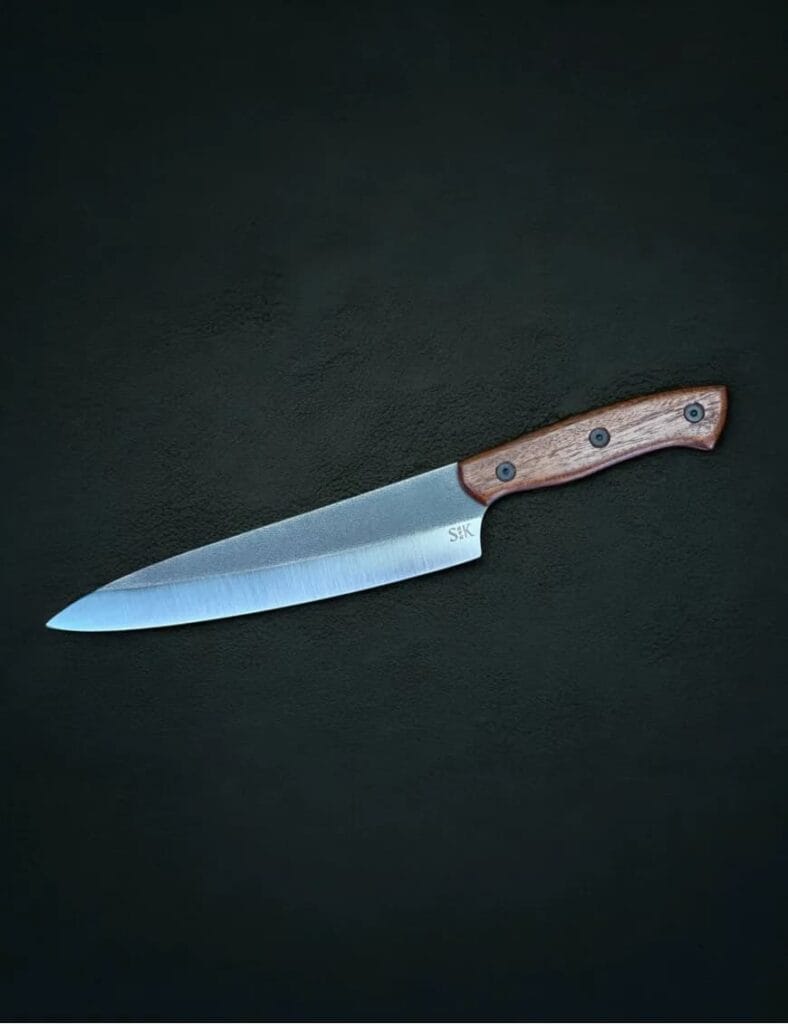
SAVAKNIFE Chef’s Knife No.3 – N690 (60–61 HRC)
If you cook frequently and want longer edge retention without stepping into “high-maintenance” territory, N690 at 60–61 HRC can be a strong middle ground: durable, stable, and capable of holding a confident edge through routine prep.
This knife is built for:
- long prep sessions
- reliable knuckle clearance
- controlled balance
- consistent cutting feel through vegetables, herbs, boneless meat, and fish
It’s the choice for cooks who want a “workhorse” that still feels refined.
4) Flat-profile control for vegetable-heavy cooking
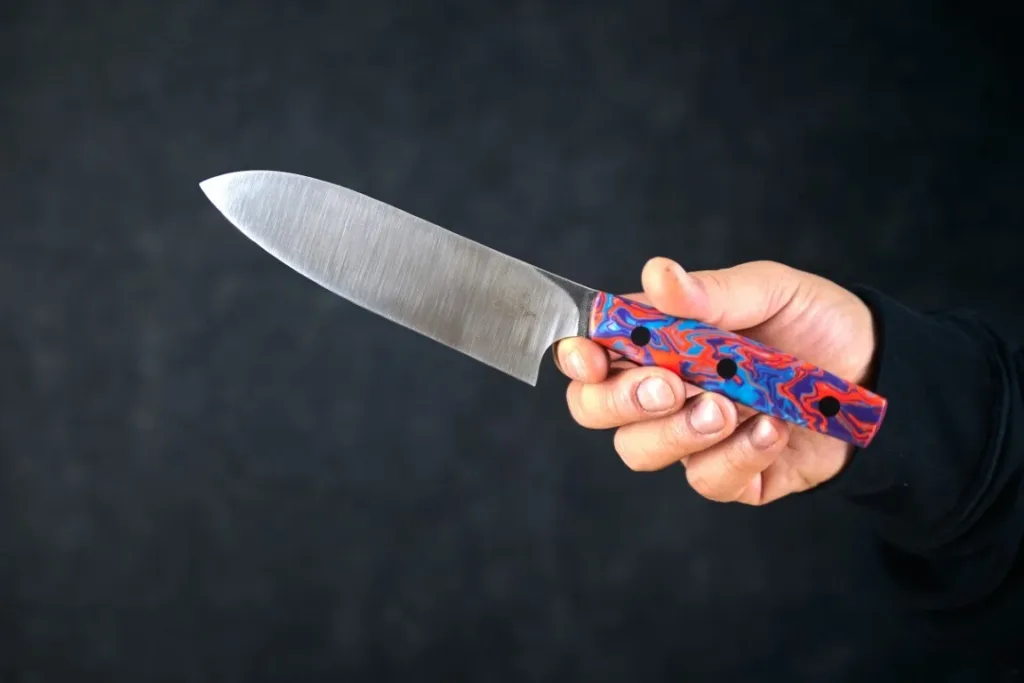
Full Tangi Santoku – N690 or Elmax
If your cutting style is more push-cut and slice (less rocking), a Santoku profile can be more natural and efficient. The flat-ish edge line and wide blade lend themselves to speed and control.
Steel choice here is about preference:
- N690 for daily excellence and easier maintenance
- Elmax for people who genuinely want maximum wear resistance and longer edge life (and understand it can be more demanding to sharpen well)
Richlite is also a smart kitchen handle choice because it’s stable, moisture-resistant, and grippy when wet – exactly what a kitchen handle should be.
5) Rhythm and flow for cooks who like momentum
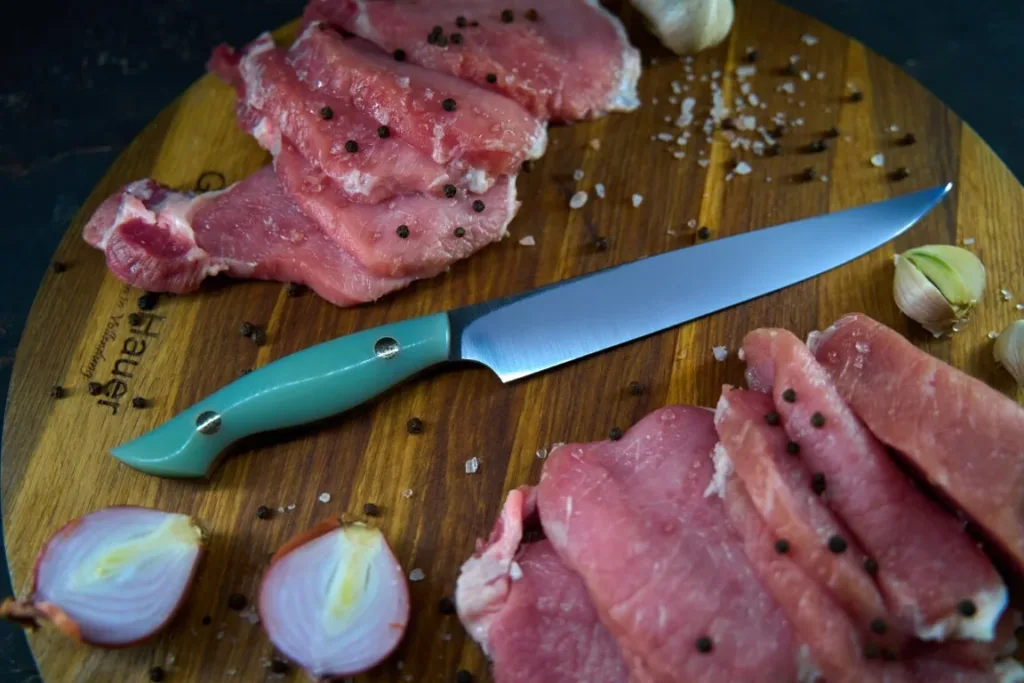
Full Tangi Scorpion – N690 or Elmax
Some cooks like a classic chef knife profile with enough curvature for rocking and a blade that carries motion naturally. The Scorpion sits in that lane: balanced, full tang, built to be used repeatedly, not admired occasionally.
Micarta is a practical kitchen handle material for long sessions – stable, water-resistant, and confidence-inspiring when your hands aren’t perfectly dry.
The “Worth It” Question Is Really About Outcomes
Here’s a more honest way to frame it:
A handmade kitchen knife is worth it if it gives you at least two of these outcomes:
- cleaner cuts with less force
- better control and less fatigue
- more stable sharpness over your cooking rhythm
- a tool you reach for automatically because it feels right
If you don’t care about those outcomes – or you won’t maintain the knife – then “worth it” becomes hard to justify.
Long-Term Cost: Cheap Isn’t Always Cheaper
People love the idea that a knife is a one-time purchase. In reality, many households buy multiple knives because the first one never becomes “the one.”
If a cheap knife:
- dulls quickly
- feels wedgey
- frustrates you enough that you avoid it
…it gets replaced. And replacement is a cost, even if it isn’t recorded as “knife budget.”
A good handmade knife doesn’t just last longer. It reduces the chance that you’ll keep searching for a knife you actually enjoy using.
The $100 Handmade Knife Mistake
So… Are Handmade Kitchen Knives Worth It?
For some people: no.
For others: completely yes.
The answer depends on whether you cook enough, care enough, and maintain enough to benefit from the differences that handmade work can deliver.
Handmade isn’t status. It’s fit.
And when fit is right, the knife stops being an object and becomes a tool you trust – quietly, repeatedly, without thinking.
Related posts

Quick Answer: Is a Handmade Knife a Good Gift? A handmade knife can be an excellent gift... Continue reading
Most “best knife” lists miss the point There’s a problem with most of the best handmade EDC... Continue reading
The modern chef knife is often treated as the one tool every home cook must own –... Continue reading
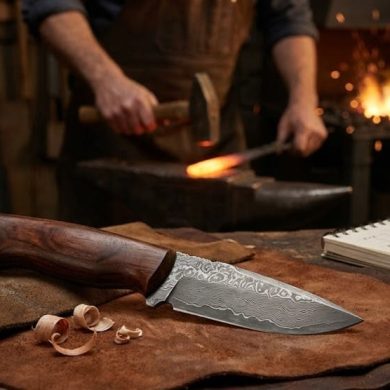
The $100 Handmade Knife Mistake Explained At some point, almost every buyer considers a $100 handmade knife... Continue reading
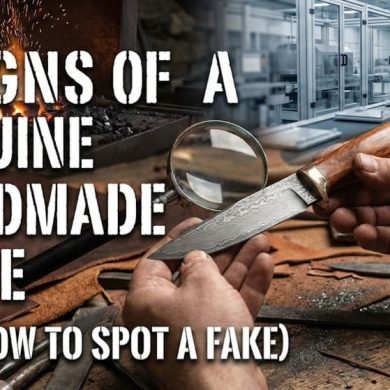
The phrase “handmade knife” is everywhere today – on Etsy listings, Instagram ads, and product pages selling... Continue reading