No products in the cart.
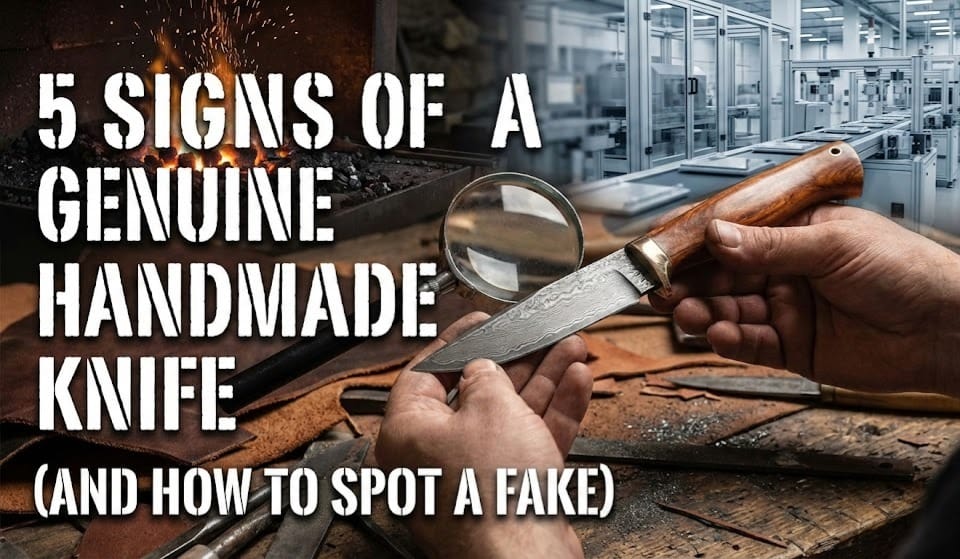
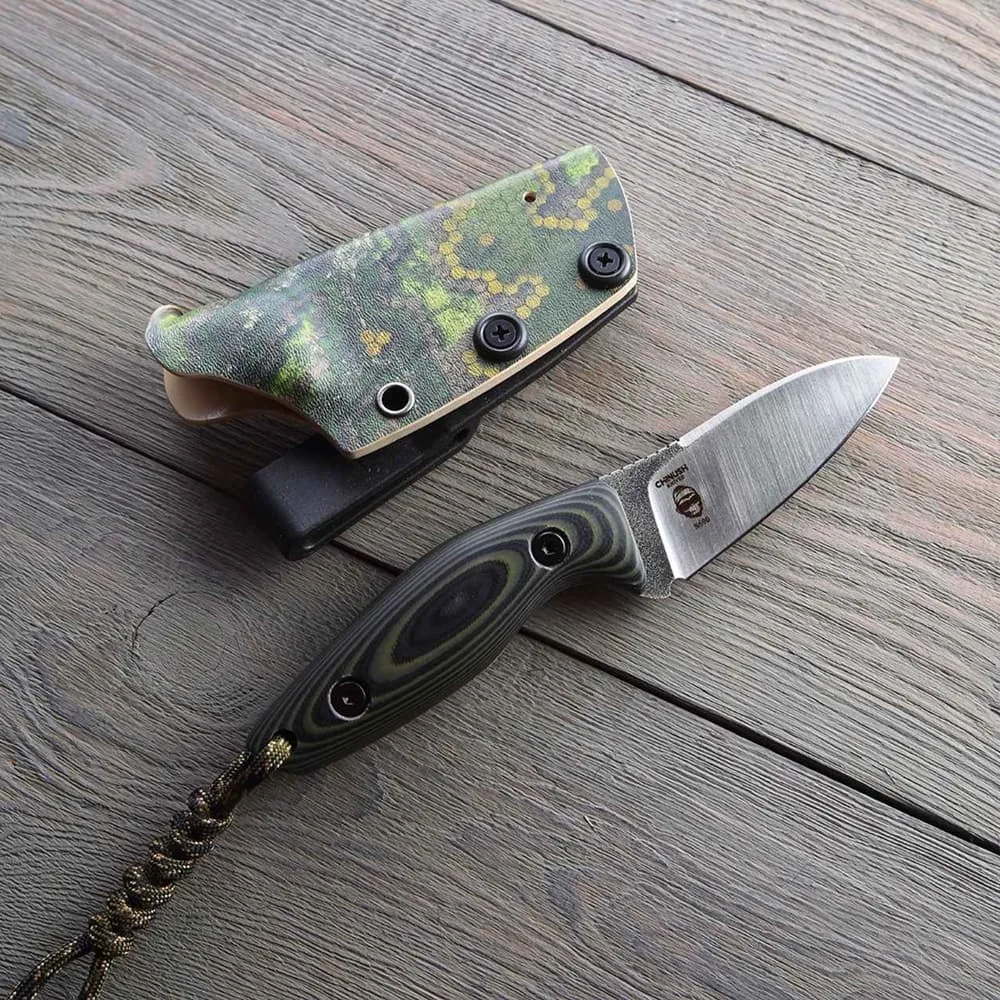
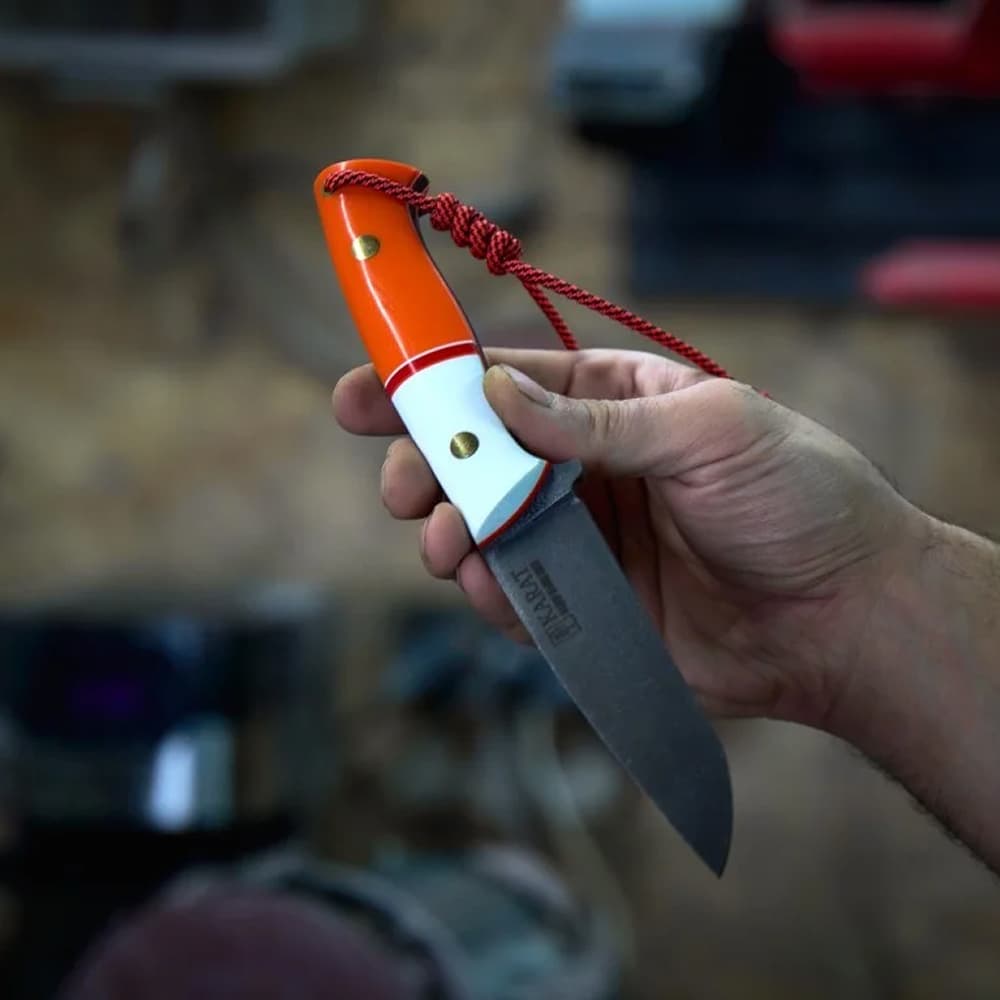
The phrase “handmade knife” is everywhere today – on Etsy listings, Instagram ads, and product pages selling blades that look custom but behave like factory tools. For buyers, especially those new to handmade knives, the difference between a genuine handmade knife and a well-marketed imitation isn’t obvious.
The problem isn’t bad intent.
It’s missing information.
A real handmade knife isn’t defined by dramatic storytelling or polished photos. It’s defined by technical decisions – blade geometry, heat treatment, ergonomics, and purpose. Once you know what to look for, the difference becomes clear – and hard to ignore.
How to Use This Guide
If you’re new to handmade knives, this guide will help you avoid common mistakes and understand what actually matters.
If you’re already considering a purchase, you may also want to read:
- Ukrainian Handmade Knives: The $100 Knife Mistake Explained
- Most People Buy Knives for the Wrong Reasons – How to Choose the Right Fixed Blade
Together, these articles give you the context most buyers never get – until after they’ve made an expensive mistake.
Sign #1: Blade Geometry in a Genuine Handmade Knife
One of the fastest ways to spot a fake handmade knife is to stop looking at the polish and start looking at the geometry.
On a genuine handmade knife:
- Grind lines are even and intentional
- Blade thickness matches the knife’s purpose
- The edge geometry is designed to cut efficiently
On many imitation “custom” knives:
- Blades are overly thick behind the edge
- Geometry is symmetrical but inefficient
- Performance is sacrificed for visual impact
This is why two knives made from the same steel can feel completely different in use. Geometry – not marketing – determines how a knife cuts.
You’ll see this most clearly in compact fixed blades built for control, where poor geometry can’t hide behind size or decoration.
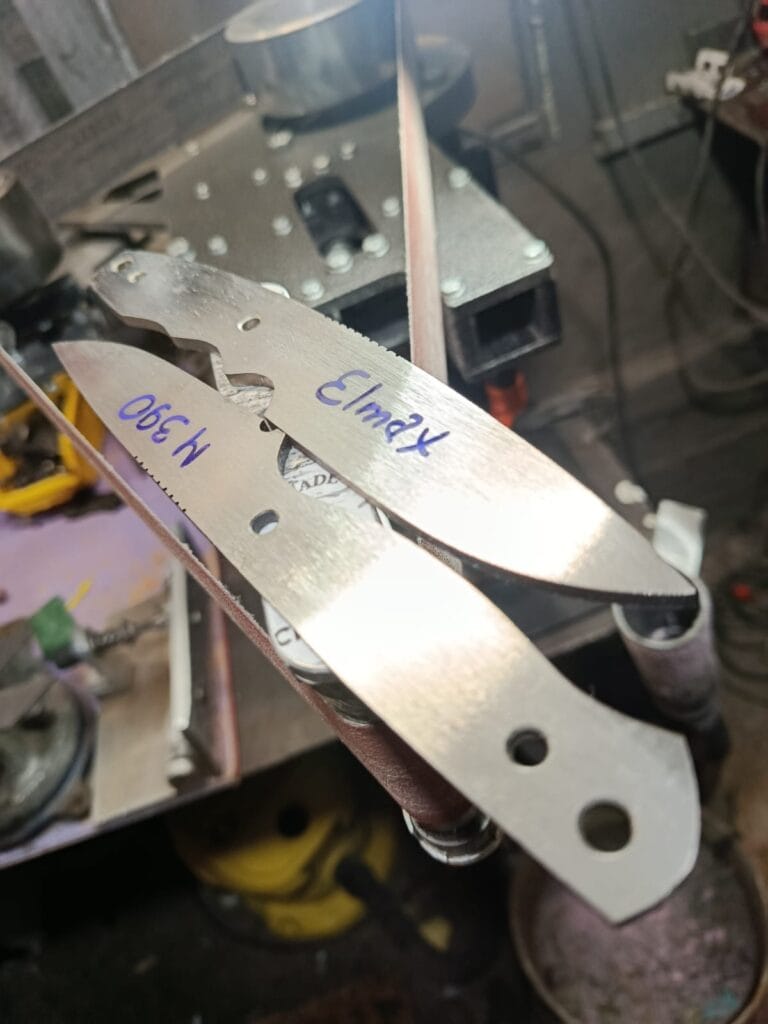
Sign #2: Heat Treatment Is Explained – Not Hidden
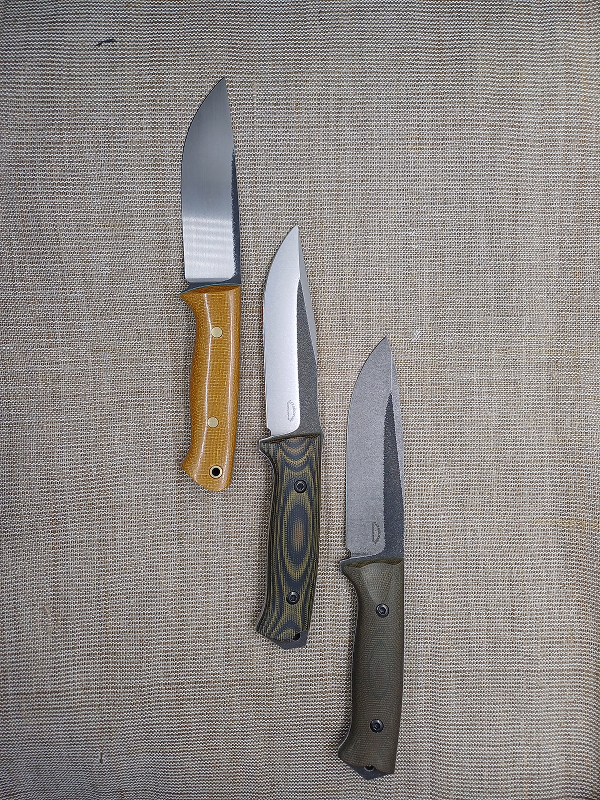
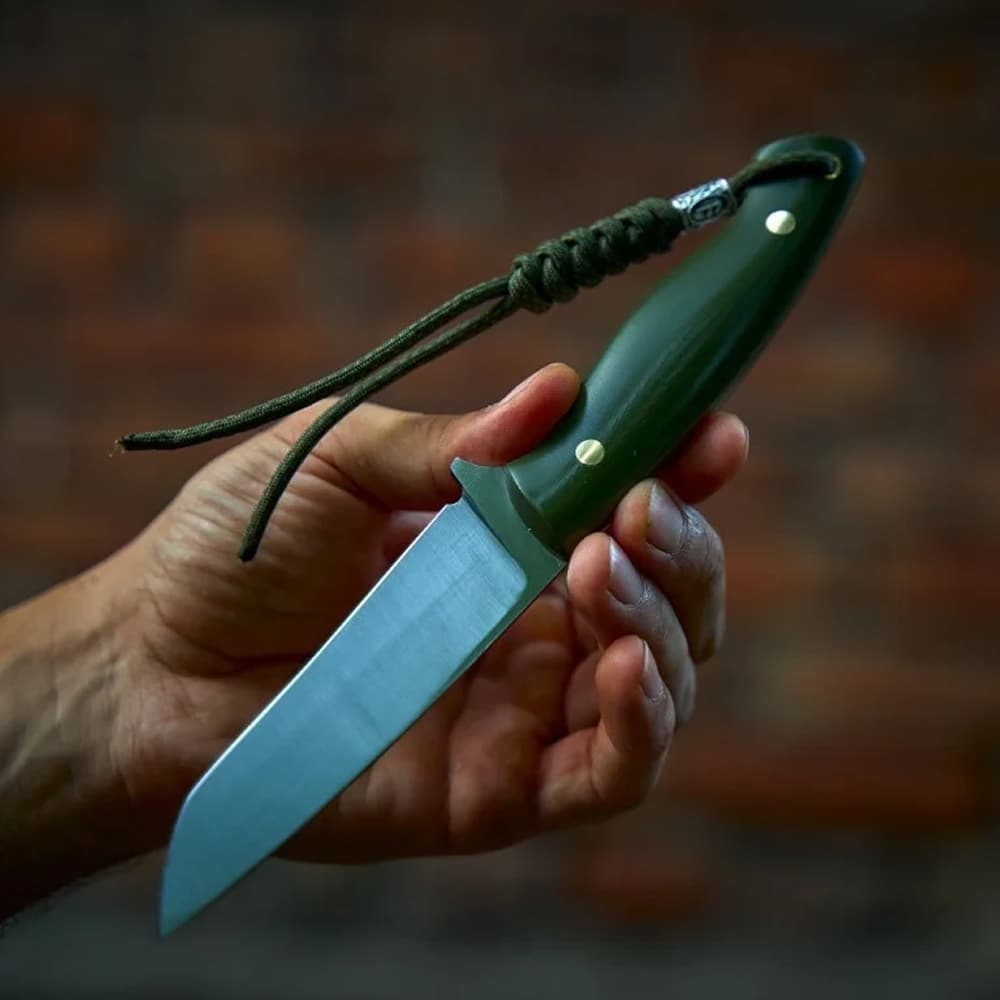
Steel choice matters, but heat treatment matters more.
A genuine handmade knife will usually come with:
- A stated hardness range
- An explanation of why that hardness was chosen
- Clear intent (edge retention, toughness, or balance)
What serious makers don’t do is hide behind vague phrases like “professionally heat treated” without context.
Heat treatment isn’t a secret process – it’s a controlled decision. Makers who understand their craft explain it confidently because they know why their knife performs the way it does.
This becomes especially important when comparing fixed blades designed for real use, where durability and edge stability matter more than numbers on paper.
Sign #3: The Handle Is Built for Use, Not Instagram
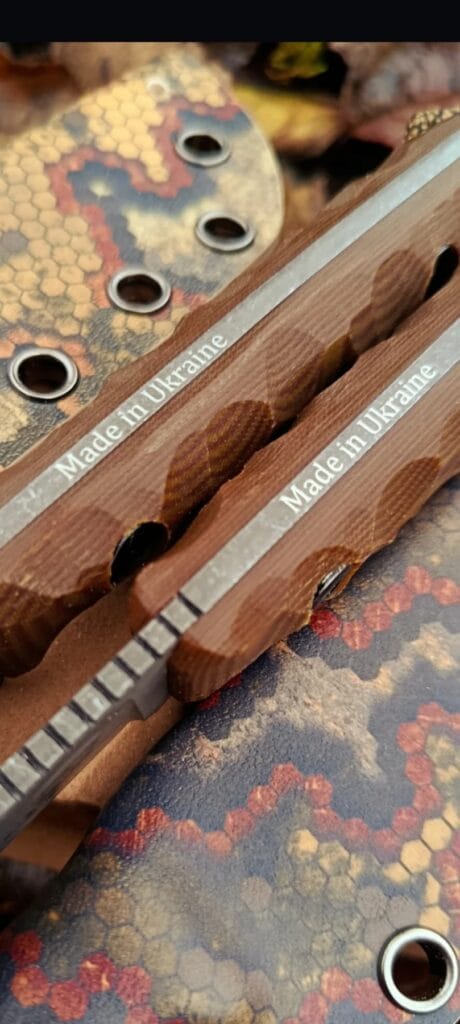
Handles are where many fake handmade knives quietly fail.
A genuine handmade knife handle:
- Fits the hand naturally
- Has clean transitions at the tang and guard
- Prioritizes comfort over exotic materials
Highly figured wood or unusual materials look great in photos, but sharp edges, poor contouring, or slippery finishes reveal themselves quickly in real use.
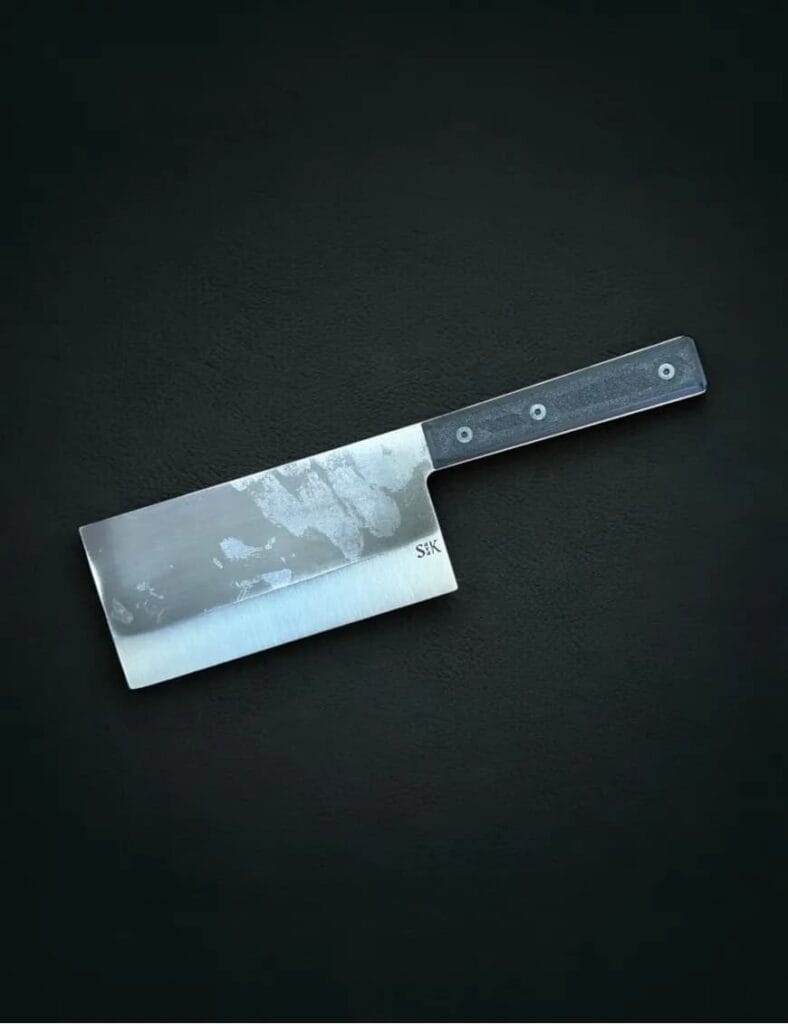
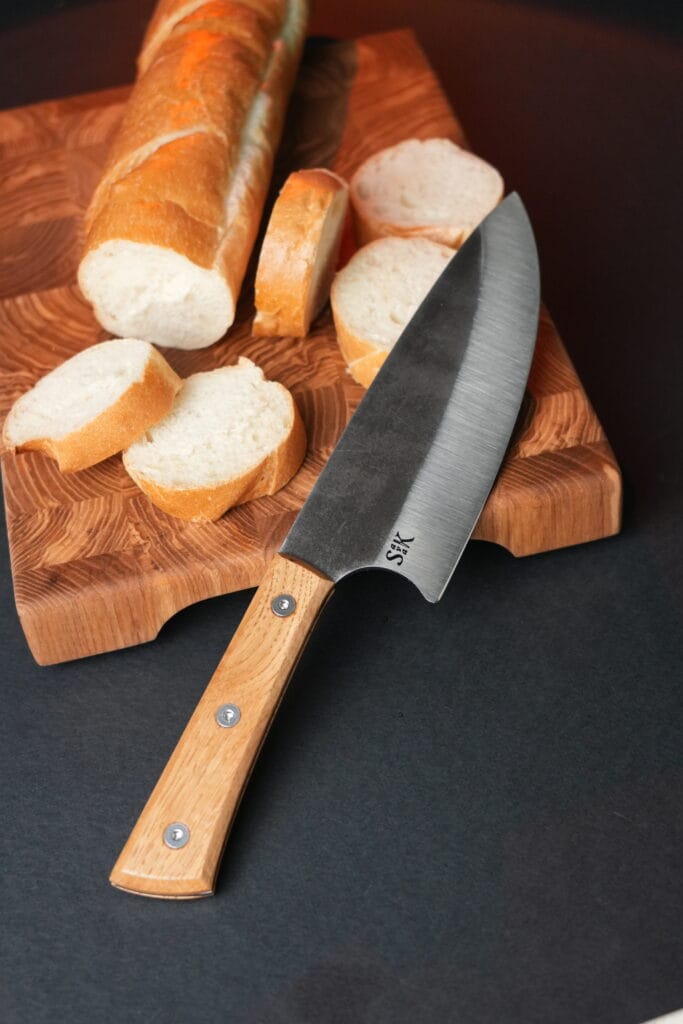
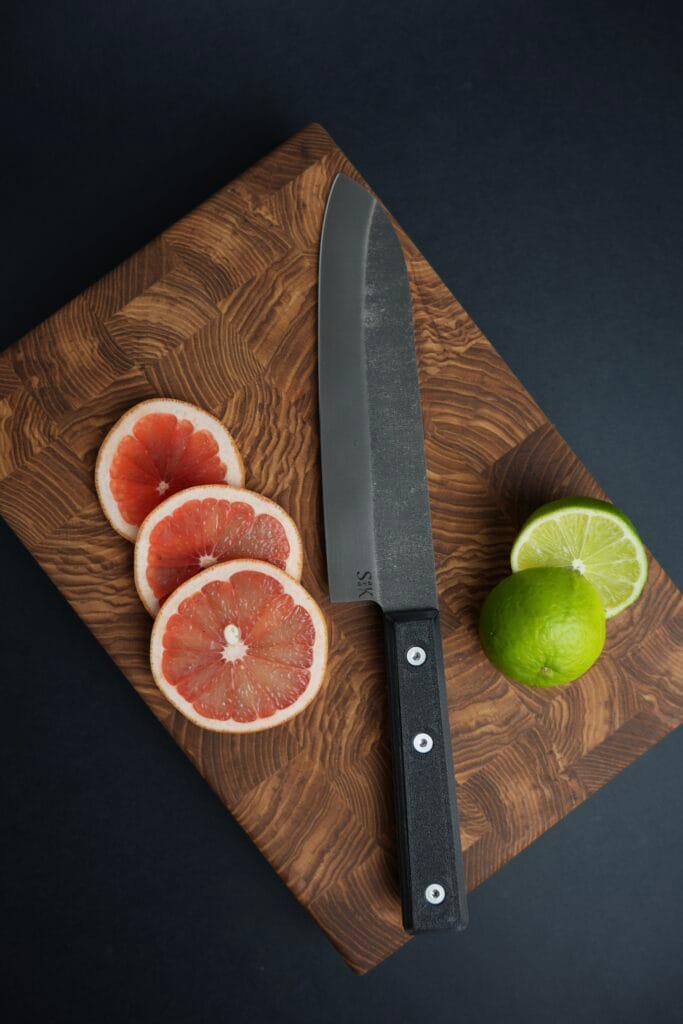
This matters most in kitchen knives, where comfort, balance, and control are tested over long prep sessions. A properly shaped handle reduces fatigue and improves precision – things no product photo can show.
If a handle disappears in the hand instead of demanding attention, that’s craftsmanship.
Sign #4: The Maker Has a Point of View (And a Track Record)
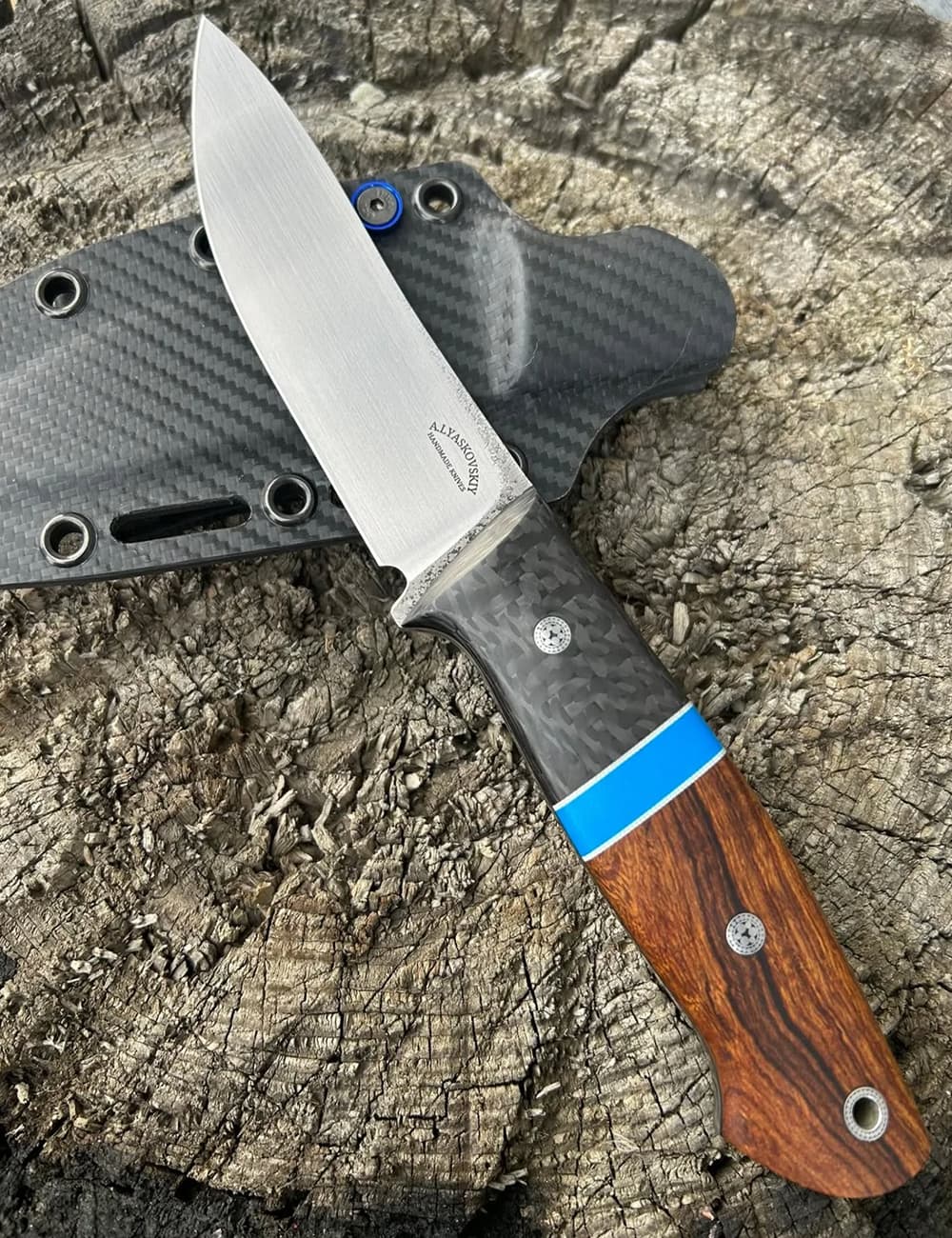
Handmade knives come from people, not factories.
A genuine maker usually shows:
- A consistent language design
- Clear opinions about how knives should work
- An evolution of ideas over time
What they don’t show is randomness.
When every knife looks different for no functional reason, it often signals assembly rather than craftsmanship. Real makers refine ideas. Even across different models, you’ll recognize their approach to balance, grind, and construction.
Looking at a maker’s body of work – not just one knife – often tells you more than any product description.
Sign #5: A Genuine Handmade Knife Solves a Specific Problem
This is the most overlooked – and most important – sign.
A genuine handmade knife is designed to solve a specific problem:
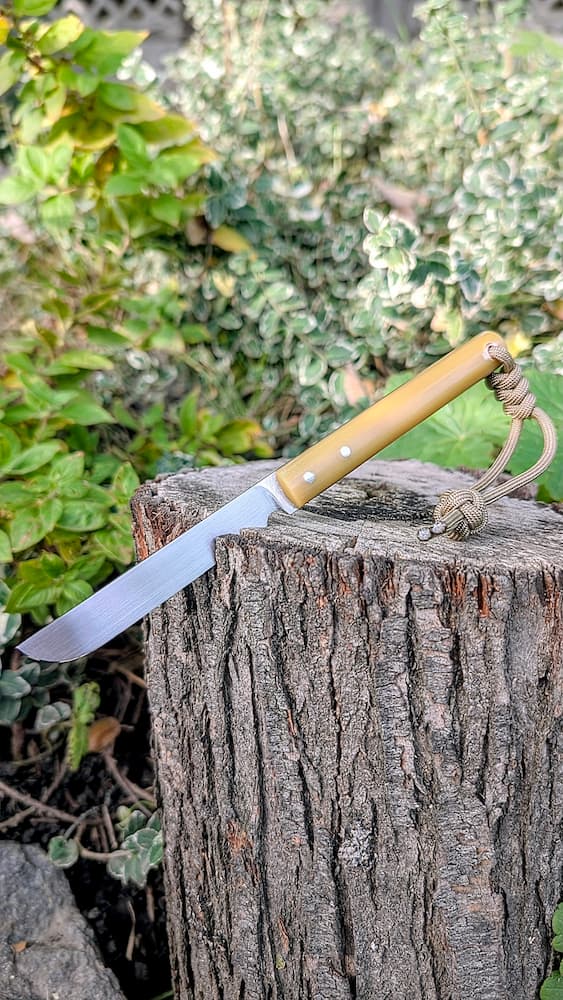
- A compact fixed blade built for controlled utility tasks
- An outdoor knife designed for durability and toughness
- A kitchen knife optimized for efficient food preparation
Fake handmade knives try to do everything at once.
When a knife claims to be perfect for camping, hunting, survival, EDC, and kitchen use, it usually excels at none. Real craftsmanship starts with a clear use case and builds the knife around it.
Once you understand the problem a knife is meant to solve, choosing the right one becomes dramatically easier.
Why Many “Handmade” Knives Are Actually Semi-Factory
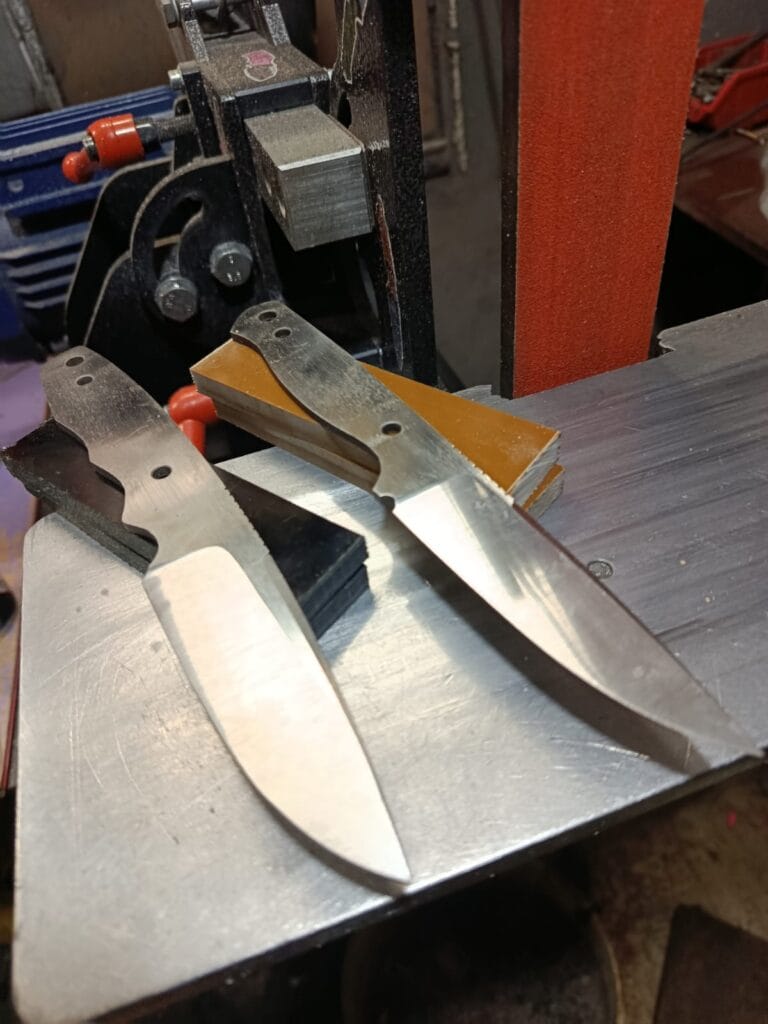
Here’s an uncomfortable truth: many knives sold as handmade are only partially made by hand.
Common shortcuts include:
- CNC-cut blade blanks
- Outsourced heat treatment with no tuning
- Assembly done by someone who didn’t design the knife
These methods aren’t inherently bad – but when they’re hidden behind the word “handmade,” buyers are misled.
True handmade knives involve responsibility at every stage. Even when modern tools are used, the maker remains accountable for geometry, heat treatment goals, and final performance. That accountability is what separates craftsmanship from assembly.
Common Questions About Handmade Knives
Is every custom knife handmade?
No. “Custom” often means configurable rather than handcrafted. Materials can be chosen while the knife itself remains factory-based.
Are handmade knives always better than factory knives?
No. Many factory knives are excellent tools. Handmade knives shine when design and heat treatment are tuned for a specific purpose.
How much should a genuine handmade knife cost?
There’s no single price, but extremely low prices usually indicate shortcuts. Time, skill, and controlled processes have real costs.
Can a handmade knife be affordable?
Yes – when the focus is on function rather than decoration. Practical handmade knives can be reasonably priced when performance comes first.
Where These Signs Matter Most
Understanding these signs matters most when you’re choosing between knives that look similar on the surface. When geometry, heat treatment, ergonomics, and purpose align, the difference is immediately noticeable – especially in daily use.
This is where browsing curated handmade knives, purpose-built fixed blades, or handmade kitchen knives becomes far more meaningful than scrolling endless listings.
What This Looks Like When It’s Done Right
A genuine handmade knife doesn’t rely on exaggerated claims or dramatic storytelling. It earns trust through clarity, purpose, and performance.
Knifia isn’t built for impulse buying. It’s built for people who want to understand what they’re buying – and why.
Once you recognize these five signs, choosing a real handmade knife stops feeling risky and starts feeling intentional.
If price is your main concern, we explain this in detail in the $100 handmade knife mistake.

Related posts

Quick Answer: Is a Handmade Knife a Good Gift? A handmade knife can be an excellent gift... Continue reading
Most “best knife” lists miss the point There’s a problem with most of the best handmade EDC... Continue reading
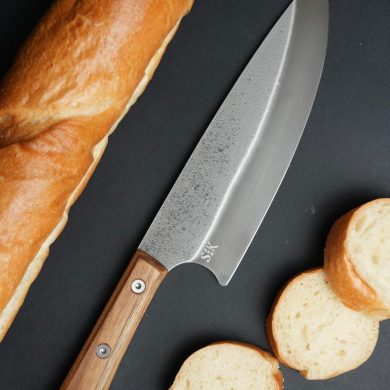
At some point, every serious home cook hits the same fork in the road. This guide breaks... Continue reading
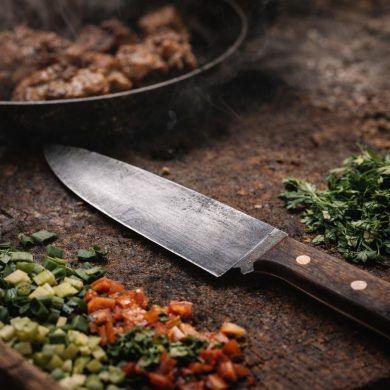
The modern chef knife is often treated as the one tool every home cook must own –... Continue reading
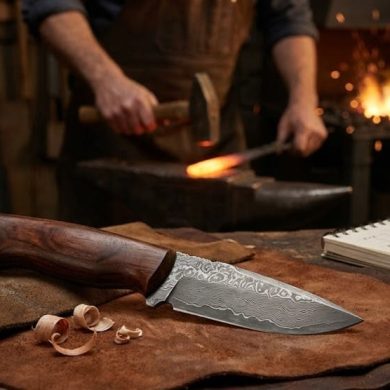
The $100 Handmade Knife Mistake Explained At some point, almost every buyer considers a $100 handmade knife... Continue reading