No products in the cart.
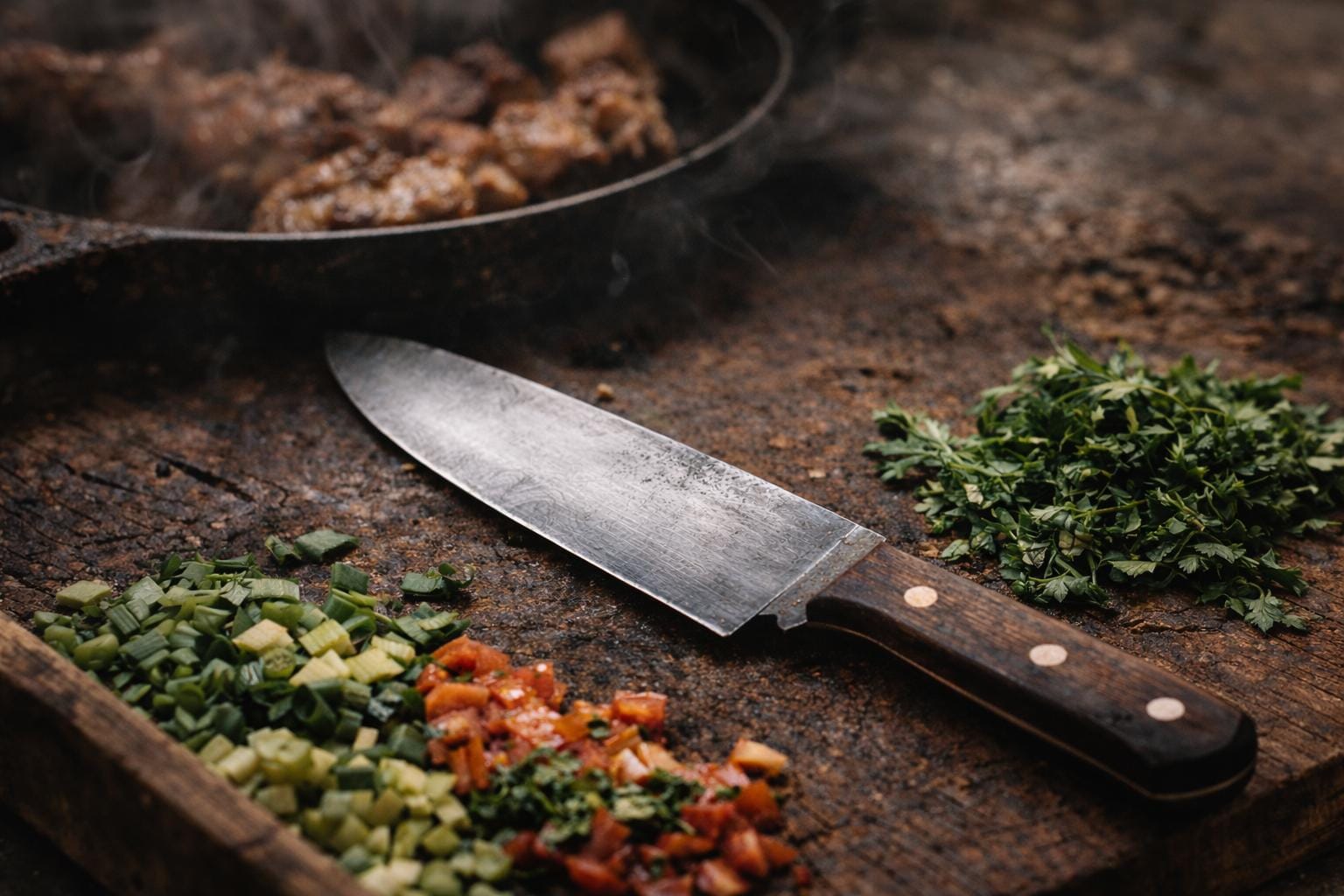
The modern chef knife is often treated as the one tool every home cook must own – but that advice is rarely based on how people actually cook at home.
Walk into almost any kitchen store, read a cooking blog, or ask for advice online, and you’ll hear the same thing:
“You just need a good 8-inch chef`s knife.”
It sounds simple. Sensible. Almost universal.
And that’s exactly the problem.
For most home cooks, the idea of a single perfect chef knife is more myth than reality. Not because chef knives are bad – but because the knife most people buy isn’t designed for how they actually cook.
Why Everyone Is Told to Buy a Chef`s Knife
The chef knife became the default recommendation for three reasons:
- It looks versatile
- It’s easy to market as “one knife for everything.”
- Professionals use it – so it feels authoritative
But professional kitchens and home kitchens are not the same environment.
A restaurant chef works for hours at a time, at large volumes, with repetitive motion and refined technique. A home cook works in shorter sessions, with mixed ingredients, limited counter space, and far less repetition.
Recommending the same knife to both is convenient – not accurate.
What Actually Happens in a Home Kitchen
Most home cooks spend their time doing a handful of tasks:
- Slicing vegetables
- Chopping herbs
- Preparing boneless meat or fish
- Occasional larger prep, not constant volume
Very few home cooks:
- Process crates of vegetables
- Break down large proteins daily
- Need long, uninterrupted slicing motion for hours
Yet many end up with long, heavy chef`s knives that feel awkward, tiring, or simply oversized for their space and habits.
That’s where frustration starts.
The Chef Knife Myth: Bigger Isn’t Better
Blade length is often mistaken for capability.
In reality, balance, height, and geometry matter far more than size.
A slightly shorter chef knife with good blade height and thin geometry often:
- Feels more controllable
- Clear the knuckles better
- Reduces fatigue
- Encourages cleaner cuts
For example, a chef knife around 165-190 mm can be far more effective in a home kitchen than the classic 210-240 mm profiles often pushed as “standard.”
That’s not downsizing – it’s right-sizing.
What Actually Makes a Chef`s Knife Work
Instead of chasing labels, home cooks should look at four things:
1. Blade Geometry
A thin grind behind the edge matters more than steel branding. Thin geometry means less resistance, cleaner cuts, and more confidence – especially with vegetables and herbs.
2. Balance
A well-balanced knife feels neutral in the hand. You shouldn’t fight the blade or compensate with grip pressure.
3. Blade Height
Adequate height gives knuckle clearance and stability – critical for safe, efficient prep.
4. Comfort Over Time
Handles matter more than most people realize. Shape, material, and finish affect how long you can work comfortably.
These factors determine whether a knife becomes a daily tool – or something you avoid.
When a Handmade Chef Knife Actually Makes Sense
A handmade chef`s knife isn’t about prestige. It makes sense when:
- You cook regularly
- You value consistency and control
- You want a knife that stays sharp longer
- You prefer a tool designed with intentions
This is where thoughtfully made kitchen knives stand apart from generic “all-purpose” blades.
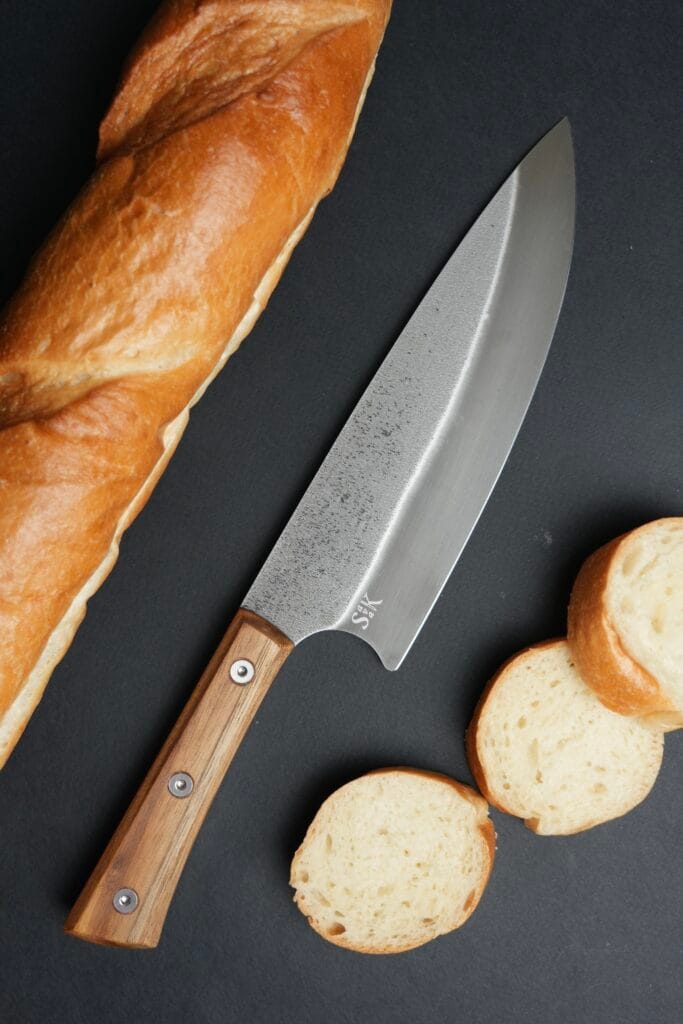
For example, a compact, precision-focused chef knife like SAVAKNIFE Chef Knife #1 (165 mm, 60 HRC) is designed around balance and efficiency, not maximum size. Its geometry and handle ergonomics suit both professional prep and serious home cooking without excess length.
Similarly, longer knives, such as SAVAKNIFE Chef Knife #2 (190 mm), are built for cooks who prefer a longer slicing motion while still retaining controlled balance and thin geometry. The polymer-coated version goes a step further by reducing food sticking, which matters far more in real cooking than most marketing features.
When a Chef Knife Is the Wrong Choice
This part is important – and often ignored.
A chef`s knife is not ideal when:
- You mostly prep small portions
- You value agility overreach
- You do more slicing than rocking
- You prefer straight, controlled cuts
In these cases, alternatives often outperform a classic chef knife.
Why Some Cooks Prefer Santoku-Style Knives
Santoku knives exist for a reason.
Their flatter profile, wider blade, and shorter length make them:
- Faster for vegetable work
- Easier to control
- More comfortable in tight spaces
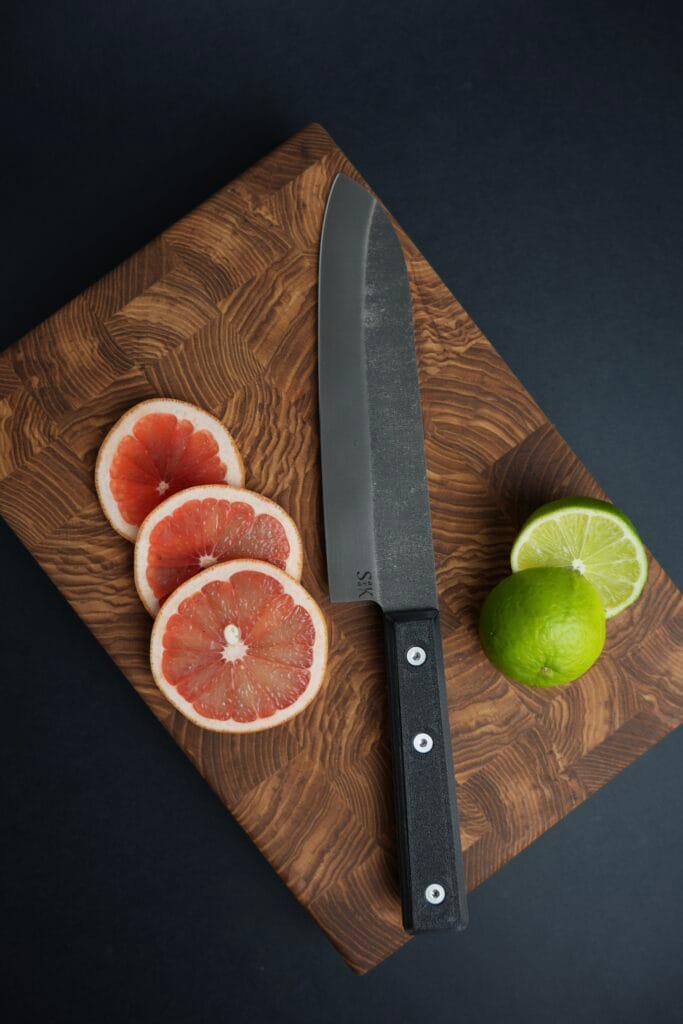
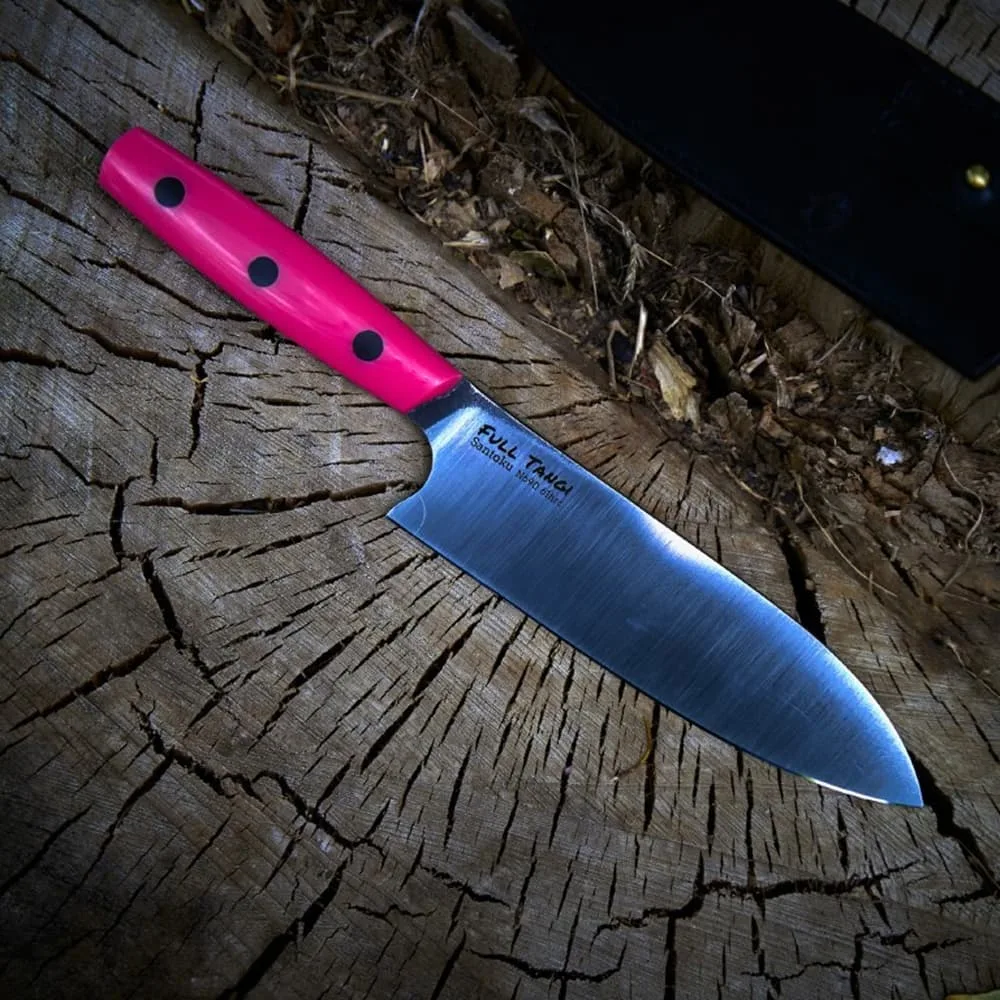
A well-executed Santoku, like the Full Tangi Santoku, blends Japanese-inspired geometry with modern steels such as N690 or Elmax. The result is a knife that excels at slicing, chopping, and mincing – exactly the tasks most home cooks perform daily.
This isn’t tradition for tradition’s sake. Its design responds to real use.
When a Full-Size Chef Knife Shines
For cooks who:
- Prep larger quantities
- Prefer flowing, rhythmic motion
- Enjoy a bit of weight and curvature
A full-size chef knife still makes sense.
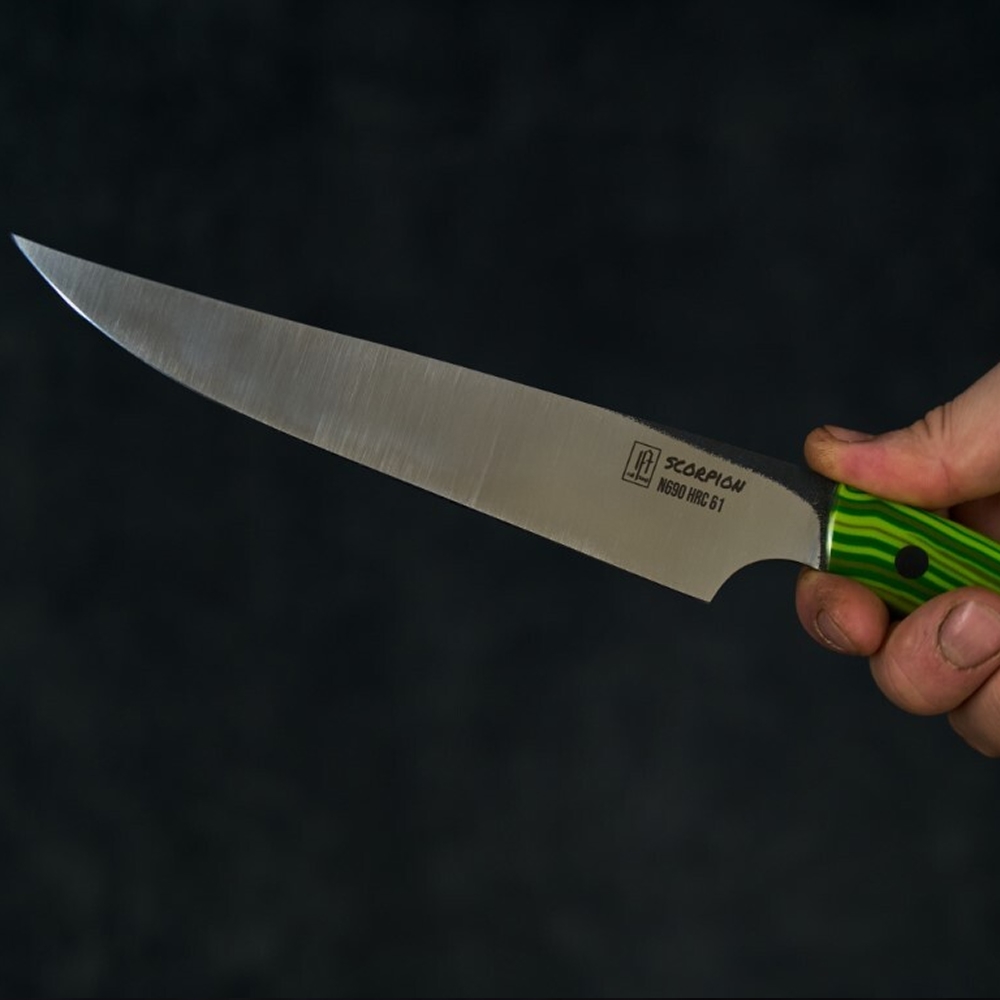
Knives like the Full Tangi Scorpion represent this category well – not because they are dramatic, but because they balance length, curvature, and control. The result is a knife that handles volume prep smoothly without feeling unwieldy.
The difference is intention. These knives aren’t oversized by default – they’re shaped with purpose.
The Real Question Isn’t “Which Chef Knife?”
It’s this:
How do you actually cook?
Once you answer that honestly, the right knife category becomes obvious.
Some cooks need compact precision.
Others want a longer flow.
Many don’t need the knife they were told to buy.
And that’s fine.
How This Connects to Craftsmanship and Price
If this sounds familiar, it should.
The same principles apply to:
- Recognizing real craftsmanship
- Understanding price differences
- Avoiding “one-knife-does-everything” myths
That’s why we recommend reading 5 Signs of a Genuine Handmade Knife and The $100 Handmade Knife Mistake alongside this guide. Together, they explain why some knives feel right – and others never do.
Why Knifia Approaches Kitchen Knives Differently
Knifia doesn’t push a single “best” chef knife.
Instead, we curate knives that:
- Solve specific problems
- Are designed with intention
- Match real cooking habits
Whether it’s a compact chef knife, a longer workhorse, or a Santoku built for precision, the goal isn’t to sell you a category – it’s to help you find a knife that earns its place on your cutting board.
Because the best chef knife isn’t the one everyone recommends.
It’s the one you actually enjoy using – every day.
Related posts

Quick Answer: Is a Handmade Knife a Good Gift? A handmade knife can be an excellent gift... Continue reading
Most “best knife” lists miss the point There’s a problem with most of the best handmade EDC... Continue reading
At some point, every serious home cook hits the same fork in the road. This guide breaks... Continue reading
The $100 Handmade Knife Mistake Explained At some point, almost every buyer considers a $100 handmade knife... Continue reading

The phrase “handmade knife” is everywhere today – on Etsy listings, Instagram ads, and product pages selling... Continue reading