No products in the cart.
Learning how to choose a handmade knife starts with one simple question: What will you actually use it for? A good knife is not just about steel names, handle colors, or how aggressive the blade looks in a photo. The right handmade knife should match your real cutting tasks, your hand, your maintenance habits, and your budget.
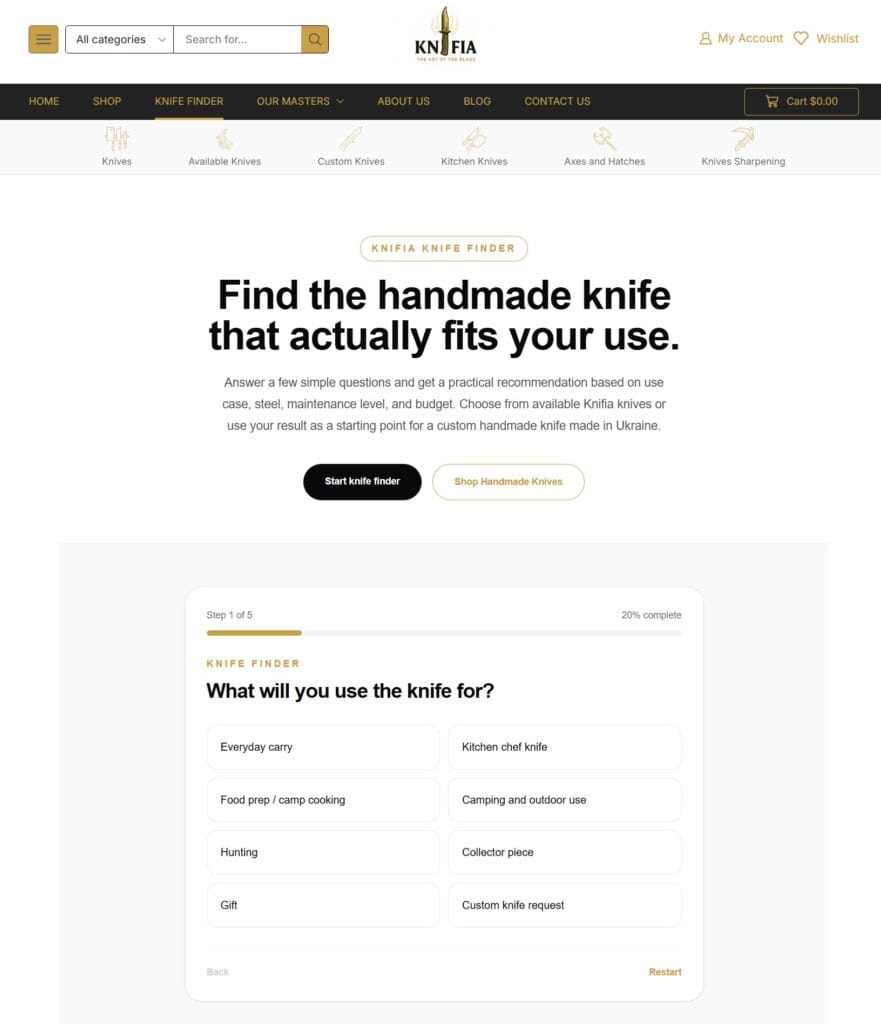
That is why Knifia created the Knife Finder. Instead of throwing every knife at you and expecting you to decode steels, sizes, and blade shapes on your own, the tool helps narrow the choice based on use, care level, size, priority, and budget. You can try it here: Knifia Knife Finder. But before you use it, here is a practical guide to the main things that matter when choosing a handmade knife
This guide explains how to choose a handmade knife without getting lost in marketing terms or steel hype.
How to choose a handmade knife by use case
Steel matters, but the first question should always be simple: what will this knife actually do?
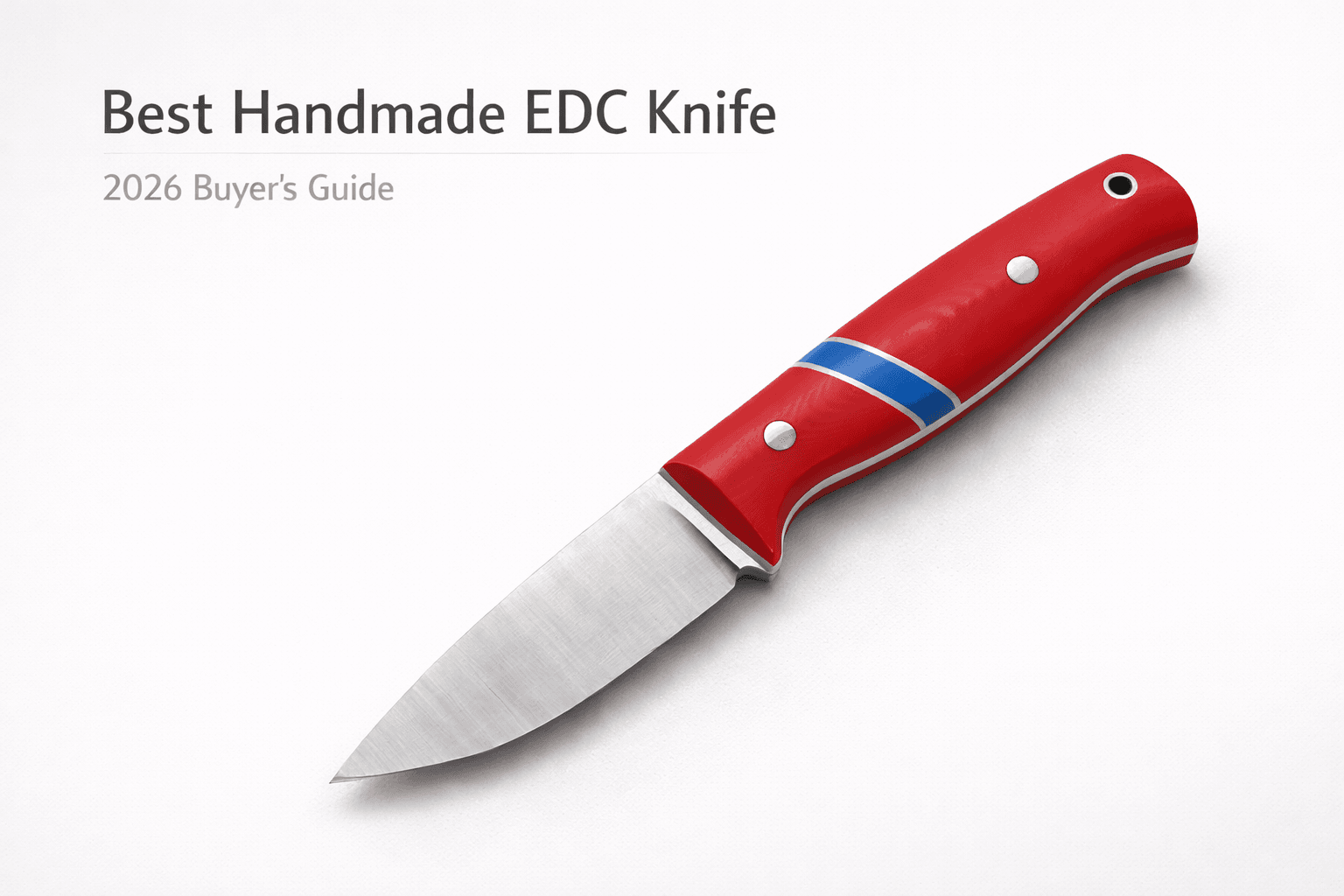
If you need an everyday carry knife, compact size and control matter more than raw blade length. A smaller fixed blade can be easier to carry, easier to draw, and easier to use for routine tasks like opening boxes, cutting cord, preparing small items, or handling quick utility work. For EDC, a knife that is too large may look impressive but become annoying in real life.
If you need a camping or outdoor knife, the priorities change. You may want a stronger blade, more handle security, and a tougher steel that can tolerate rougher use. Camp chores, fire prep, food prep, and field tasks all demand reliability. In this category, toughness and grip often matter more than polished elegance.
If you need a kitchen knife, do not choose it like a survival knife. A chef knife, Santoku, or kitchen prep blade should prioritize cutting geometry, balance, food release, and edge stability. A thick tactical-style blade may be strong, but it will usually feel clumsy on a cutting board. The right kitchen knife should move cleanly through vegetables, meat, herbs, and daily prep work.
If you need a hunting knife, focus on control, edge stability, and the shape of the blade. A hunting knife does not need to be huge. It needs to work precisely, safely, and predictably when your hands may be tired, wet, or cold.
How to choose a handmade knife steel
Knife steel can become confusing fast. Some buyers chase premium steel names without thinking about the tradeoffs. That is a mistake.
A steel like N690 is a strong, practical choice for many buyers because it offers good corrosion resistance and relatively easy maintenance. It is useful for people who want a reliable stainless steel knife without turning care into a second hobby.
AEB-L is often appreciated for fine edge behavior and ease of sharpening. It can be an excellent choice when clean cutting and simple maintenance matter more than chasing the hardest steel possible.
Elmax offers a premium balance of edge retention, toughness, and corrosion resistance. It is a good choice for buyers who want higher performance without stepping into a steel that becomes frustrating to maintain.
M390 is known for strong corrosion resistance and excellent edge retention. It makes sense when long-lasting sharpness and stainless performance are priorities. The tradeoff is that sharpening can take more effort compared with simpler steels.
3V is about toughness. It is a serious option for hard-use outdoor knives, bushcraft knives, and field tools. But it is not the lowest-maintenance choice. If you choose 3V, you should be willing to dry and oil the blade after wet use.
K110, often treated as a D2-type steel, can offer strong wear resistance and good value, but it is not as corrosion resistant as true stainless options. It can be a smart utility steel if you understand that it needs basic care.
The point is simple: there is no perfect steel. There is only the steel that fits your use and your maintenance habits.
If you want to understand how to choose a handmade knife, steel is important – but it should come after use case, size, and care level.
Choose the right handmade knife size
Another key part of how to choose a handmade knife is choosing a size you will actually carry or use.
Size is one of the easiest things to get wrong.
A compact knife is easier to carry and control. It is a better fit for everyday carry, small utility work, and users who want something discreet and practical. The downside is reduced reach and less cutting surface.
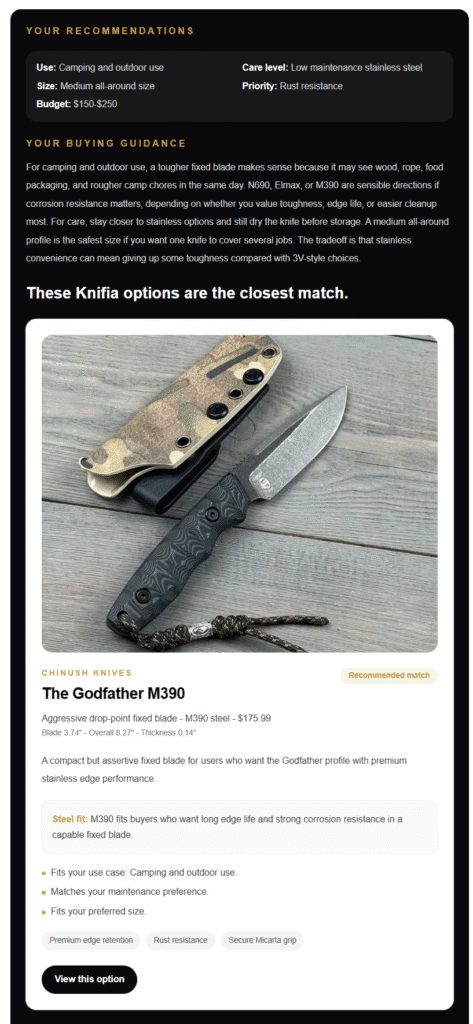
A medium knife is the safest all-around choice. It can work for EDC, camping, food prep, and general outdoor use without becoming too specialized. If you are unsure, a medium blade is usually the best starting point.
A larger working blade makes sense when the task calls for more reach, more slicing length, or more cutting power. Kitchen knives, hunting knives, and larger camp knives can benefit from size. But a larger knife is also less convenient to carry and may be too much for simple everyday tasks.
The wrong size can ruin an otherwise excellent knife. A great knife that stays in a drawer because it is too big, too heavy, or too awkward is not the right knife.
Be honest about maintenance
Some knife buyers say they want maximum performance, but they do not want to maintain the blade. That combination does not always work.
If you want low maintenance, lean toward stainless steels like N690, AEB-L, Elmax, or M390. You should still clean and dry the knife, especially after food, rain, sweat, or humid storage, but these steels are more forgiving.
If you are comfortable with more care, you can consider tougher or more wear-resistant options like 3V or K110. These steels can perform extremely well, but they reward owners who maintain their tools properly.
A knife is not just a purchase. It is a working object. If you want it to last, care matters.
Match the blade shape to the task
Blade shape is not only visual style. It affects how the knife cuts.
A drop-point fixed blade is versatile and practical. It works well for outdoor tasks, EDC, and general utility because it offers a strong tip and useful belly.
A chef knife profile is made for the cutting board. It should support slicing, chopping, and controlled prep work. It does not need to look tactical. It needs to cut well.
A Santoku-style blade is excellent for fast kitchen work, vegetables, meat, fish, and daily prep. It is a strong choice for home cooks and serious kitchen users who want control and speed.
A tanto-inspired profile can be useful for utility or tactical-style cutting, but it is not automatically better. It depends on the job. A tanto profile may look aggressive, but that does not make it the best choice for food prep or hunting.
The shape should serve the task. If it does not, the design is just decoration.
Handmade means more than appearance
A handmade knife has a different kind of value. You are not just buying a mass-produced tool. You are buying the maker’s choices: heat treatment, handle shaping, blade geometry, balance, finishing, and small details that affect real use.
That does not mean every handmade knife is automatically good. A handmade knife still needs honest design, proper materials, and clean execution. But when it is done right, it has character and function that factory knives often struggle to match.
Knifia focuses on handmade Ukrainian knives because these makers bring practical design, serious craftsmanship, and their own identity into the work. The best knives do not feel generic. They feel intentional.
Use the Knifia Knife Finder
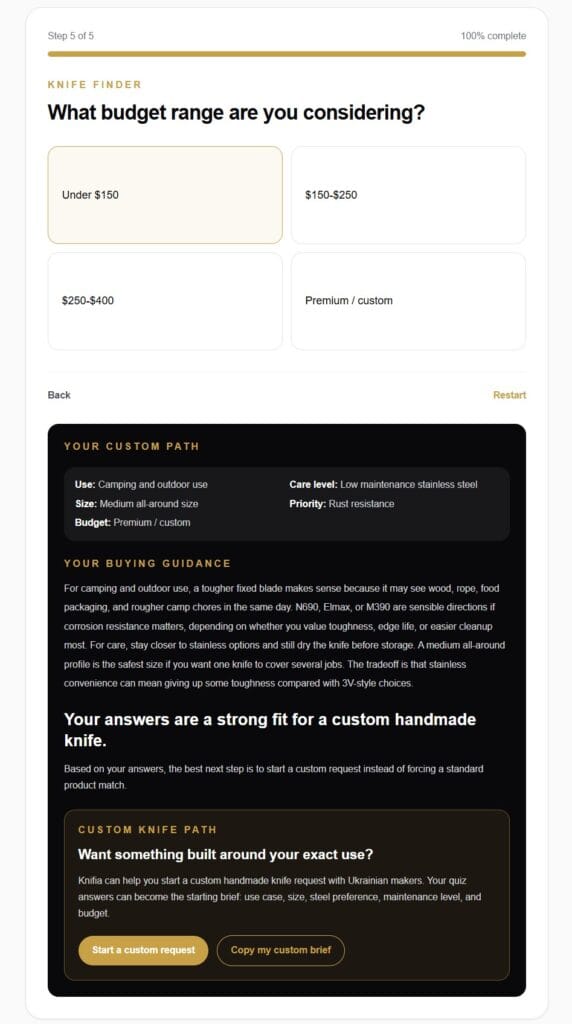
If you already know exactly what you need, you can browse by maker, steel, or category. But if you are unsure, the Knifia Knife Finder is the fastest starting point.
It asks a few practical questions:
- What will you use the knife for?
- How much maintenance are you comfortable with?
- What size makes sense?
- What is your top priority?
- What budget range fits?
Then it recommends knives based on those answers. If there is no exact match, it can help create a custom knife request brief so the Knifia team can guide you toward a better option.
The Knifia Knife Finder was built to make how to choose a handmade knife more practical and less confusing.
Try it here: Find your knife with the Knifia Knife Finder.
Final thought
The best handmade knife is not always the most expensive one. It is not always the hardest steel, the largest blade, or the most dramatic design. The best handmade knife is the one that fits your real use, your hand, your care habits, and your expectations.
In the end, how to choose a handmade knife comes down to fit: the right job, the right steel, the right size, and the right level of care.
Choose honestly. Choose with purpose. And when you are not sure, let the Knife Finder narrow the path.